

By Alek Rybczynski, CFP's Poland Reporter ——Bio and Archives--November 16, 2026
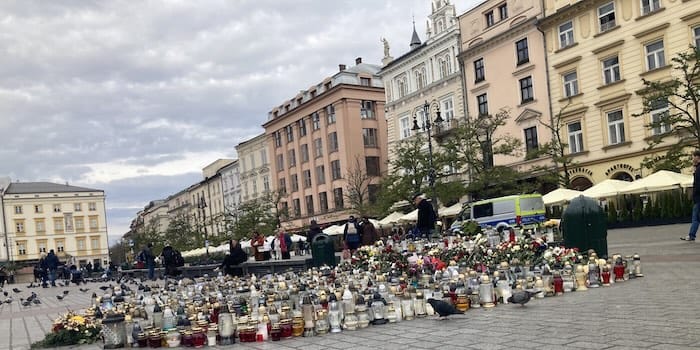
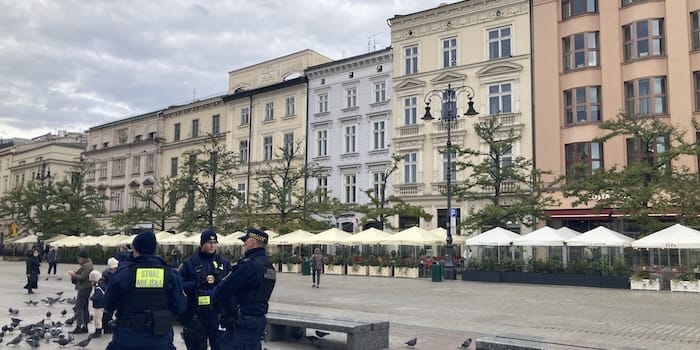
There are a few people about, but they slip past furtively, in a hurry, as if they didn't want to notice the beauty that has always radiated from this place. Kraków is no longer itself. Police vans stand at the mouths of the streets, and police officers and city guards patrol the area.

Hundreds of memorial candles have been lit in various spots, some already burned out, yet all still recalling the tragedy that happened here.
With my small suitcase, I look like a tourist, but no one approaches me with an offer of a tour or a more exclusive ride in a horse-drawn carriage.
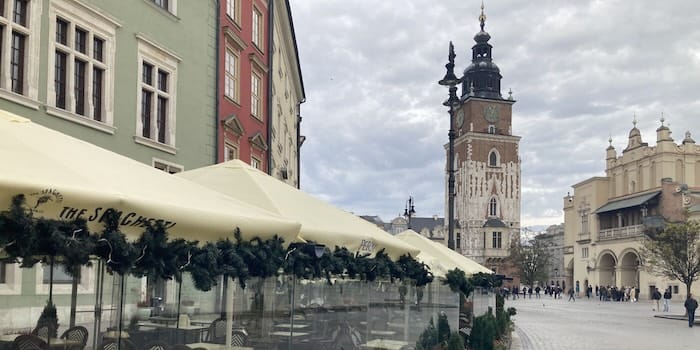
The patios in front of the cafés and restaurants are empty.
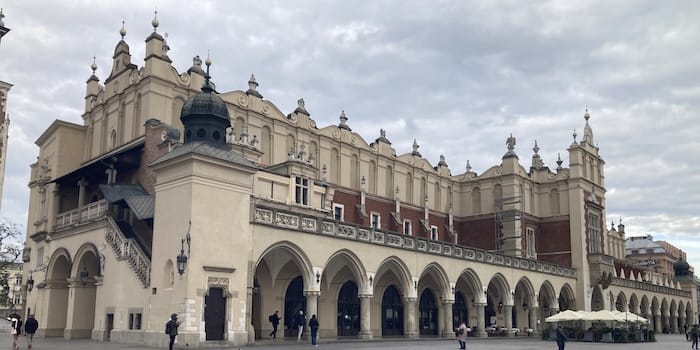
So is the square itself, as if frozen in a frame of time.
The walls of the tenement houses around the square seem to have sunk into silence, and passersby are awkwardly getting used to a new reality, one that has become a great unknown.
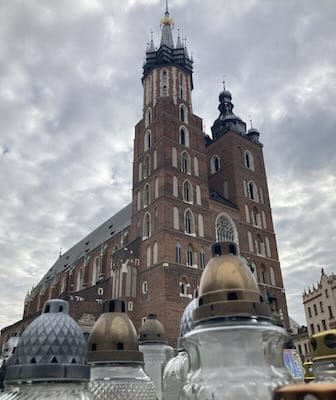
Only the hejnał, the bugle call played from St. Mary's Tower by a firefighter at noon sharp, reminds me that the royal city endures, rooted in tradition, history, and faith.
The clear note of the trumpet rings out, then suddenly stops. As legend has it, centuries ago a Tatar invader's arrow cut the melody short. Now it feels as though a terrorist's bullet has stopped the pulse of the city.
View Comments